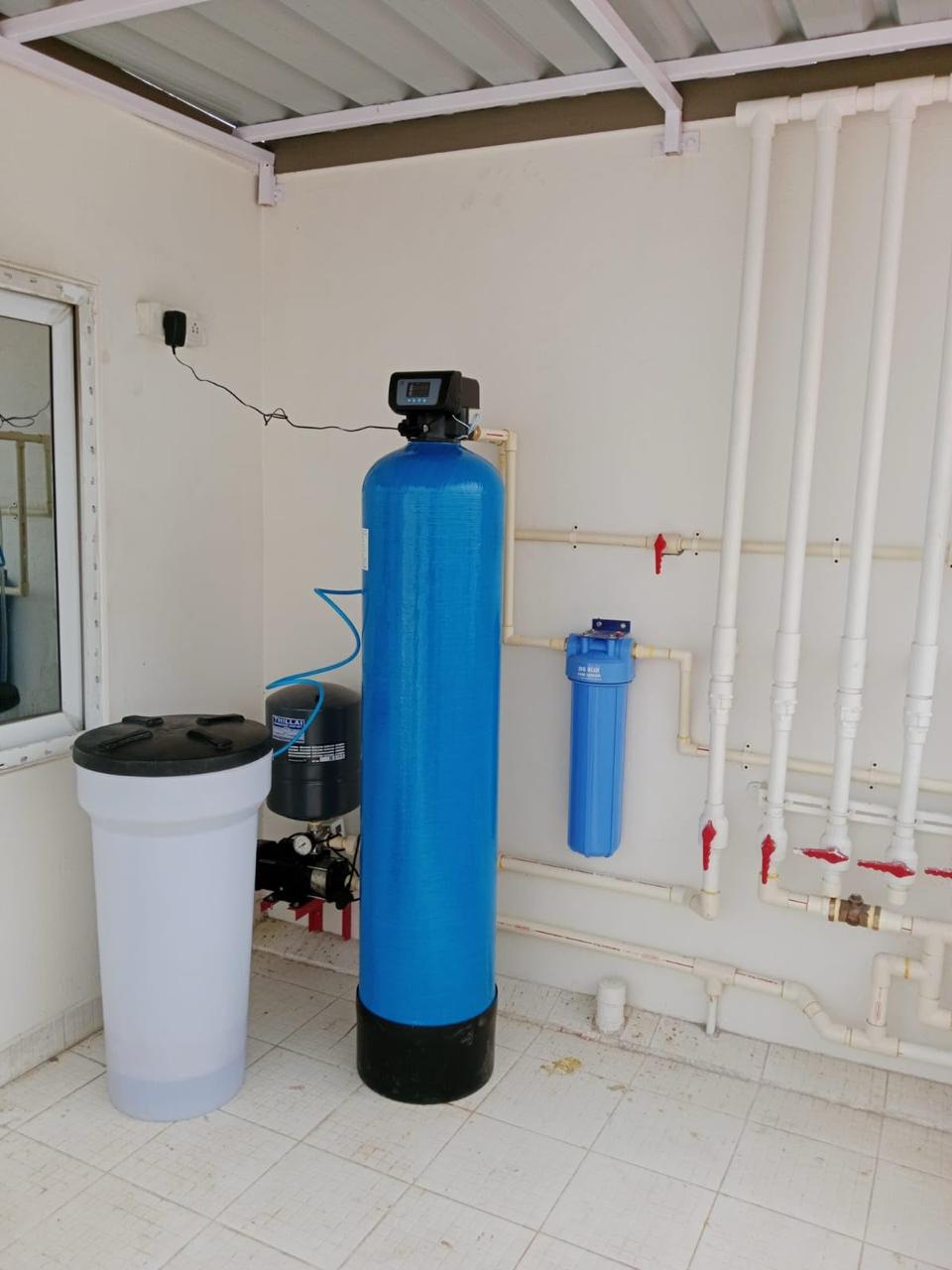
A water softener has many benefits are an excellent option for homes with light to heavy hard water. Because it reduces water hardness by removing of heavy minerals like calcium, iron, and magnesium from the water supply coming into the home, a water softener prevents common water problems including mineral deposits and scale buildup on leading to leaky faucets and clogged pipes, damage to water-based appliances, chalky films on dishwasher cleaned glasses, dry skin and hair after showering, and faded colored clothing from the washing machine.
A water softener solves these issues by preventing heavy minerals from binding or flowing through the water. Softened water can:
How a Water Softener Works
There are many water softeners on the market, but almost all rely on the same principle—ion exchange, a chemical process that substitutes sodium (sometimes potassium) for the minerals that make water hard. In a conventional system, water passes through a tank with a bed of resin beads saturated with sodium, exchanging any calcium and magnesium ions in the water with sodium ions. When the minerals attach to the beads, the sodium that had been on the beads enters the volume of water. By the time household water exits the system, it is no longer hard.
Over time, the resin bed becomes flush with the minerals that have been drawn out of the hard water. At that point, the water softener must go through a “regeneration” cycle, during which sodium-rich water restores the resin beads to their initial sodium-saturated state. Upon completion of the cycle, the softener returns to regular operation, softening the household water that passes through it.
Water softeners work by either drawing heavy minerals out of the water using a process called ion exchange or by neutralizing these minerals so that they are unable to bind together and remain soluble in the water.
There are two main types of water softeners that do this, although in different ways:
Salt-based water softeners are the most commonly used and effective softener types. Most water softener systems are salt-based systems, so there are a high number of salt-based options available. They come in a variety of sizes and are appropriate for just about every dwelling.
A salt-based water softener typically works by drawing heavy minerals in the water, like calcium and magnesium, into a resin within the softener and exchanging them for sodium (salt). By removing the heavy minerals, the water returns to a healthy neutral state.
The downside to these softeners is that the resin then needs to be recharged with salt. For most homes, this will need to be done about once a week. These water softeners are also much larger than salt-free or magnetic softeners, making them not the best choice for smaller spaces.
However, there are portable water softeners that are salt-based. Designed specifically for portable functionality, these softeners are an excellent choice for an RV, a large boat, an mini/micro home, or an efficiency apartment. An included hose allows the user to connect directly to an outdoor faucet or campground water supply for instant access to softened water for cleaning, drinking, and bathing.
These sand-based 16,000-grain capacity water softeners can be recharged using simple table salt, but they do require frequent recharging with regular use. However, with the reduced size, there is also a lower price, making this option easier on the wallet for simple, low volume instances.
While salt-based water softeners do add salt to the water, it is only in trace amounts that rarely get noticed. This level of sodium is safely within the recommended range for healthy individuals, but those with low-sodium diets may wish to opt for a salt-free water softener (read next section) that uses potassium, not sodium
Dual-Tank Water Softeners
A dual-tank water softener is a salt-based softener with two resin tanks. This style is often the best water softener to use for well water due to its better ability to filter heavy minerals. These tanks function in the same way as a single-tank salt-based softener, except that when one tank is in the regeneration cycle, the other tank is still providing softened water to the household.
Dual-tank softeners aren’t necessary for most homes, and due to their size, they can be challenging to place and install. They also carry a higher price tag than the other styles and do need to be recharged. However, a dual-tank water softener can handle more water per regeneration cycle and never run out of softened water.
Understanding how the different types of salt-free water softeners work, as well as how much water they can treat on a daily basis, is integral to purchasing the right unit.
As indicated by their name, salt-free water softeners don’t use salt to remove heavy minerals from water; in fact, they don’t remove the heavy deposits at all. Instead, they condition the water so these particles cannot build up on faucets and showerheads. While the minerals remain in the water, they are put through a conditioning process.
Salt-free water softeners tend to cost more initially, do not use salt or electricity. These models are also smaller than salt-based systems, so they can easily be used for small- to large-size houses. However, these units may struggle with very high levels of hard water and households with higher than average water usage.
Electromagnetic and magnetic
Electromagnetic water softeners take up almost no space at all so are great for small spaces. Similar to other salt-free water softeners, electromagnetic water softeners do not remove particles that cause hardness in water but rather use a magnetic field to strip negative or positive ions from heavy minerals to magnetize the grains and neutralize them, which prevents them from clinging to surfaces and causing scaling because they are no longer positively or negatively charged, the minerals cannot bond to each other. Instead, they remain entirely soluble in the water. These systems plug into a standard outlet and don’t need to be plumbed into a home, making them an attractive low-maintenance option for softening water. Magnetic models perform the same task but don’t need electricity and require little to no maintenance. However, they are not as powerful and are only suitable for small homes.
Polyphosphates
Instead of removing impurities from the water, the use of polyphosphates conditions the water so impurities cannot create scaling on plumbing or faucets using a filtration cartridge. This type of system is used primarily in restaurants and other commercial settings to protect appliances from scaling.
Full Filtration
Full filtration systems not only soften water, but they also remove other contaminants in drinking water. This type of salt-free water softener functions by passing the water through a filter that crystallizes minerals, preventing them from sticking to one another and creating the scaling that can damage pipes and appliances. They also remove other contaminants, including herbicides, bacteria, viruses, pesticides, and chlorine. Filters on these water softeners can be pricey and typically last 6 months to 1 year.
It is important to be mindful that there is a difference between a water softener and a water purifier. It is safe to drink water from a water softener if the only contaminants are hardening minerals. The water softener will remove the hardening minerals or neutralize them so they cannot bind together. However, a water softener is not a water filter and will not remove any other harmful particles. As such, it should only be relied on to soften water, not purify it. If you’re unsure about the safety of your drinking water, contact your local health department, test it yourself, or send out a sample for to be expert-tested.
Flow Rate
A salt-free water-conditioning system functions between the main water line that enters a home and all of the water receptacles in a home, treating the water as it flows into the home’s plumbing.
Salt-free systems that use filtration can affect the flow of water, potentially slowing it. Electromagnetic water treatment systems aren’t plumbed into a home’s water system, so they don’t affect a home’s flow rate. With that in mind, the water softeners with filtration systems must have a flow rate that meets the demands of the household to prevent drops in water pressure.
The average household, homes with one to three bathrooms, requires a filtration system with a flow rate of between 8 and 12 gallons per minute. Larger households require around 15 gallons per minute.
Installation
One of the main advantages of a salt-free water softener is that they’re generally much easier to install than salt-based water softener systems. While the latter typically requires professional installation, a salt-free system is typically an easy DIY job.
Electromagnetic salt-free water softeners don’t require any plumbing and typically take about 15 minutes to install. This type of water softener has wires that wrap around the water supply pipe with a power source that sends electromagnetic waves through the wire.
Full filtration systems and whole-house systems are more involved as they need to be attached to the incoming water supply pipe but are still relatively quick and easy to install.

Each of our products undergoes rigorous quality checks to meet industry standards.

As a wholesale supplier, we provide bulk orders at highly competitive prices.
At Bhavani Enterprises, we are committed to delivering high-quality industrial and home appliances that meet the diverse needs of our clients.
 Contact Us